2026 Predictions for AI Engineering (Part 2)
5 industry-level predictions shaped by AI builders and tech leaders.

The new year is here and we’re back with 5 more AI engineering predictions for 2026. Part 1 was all about technical predictions—how the quintessential tech stack will look, which new types of models are emerging, all that good stuff.
Welcome to Part 2, where we consolidate what we’ve heard across the industry from technical leaders and executives to share insights at the industry level. Some are controversial, but thankfully none involve humanity being taken over by a hive mind (anyone else watching Plur1bus?). Let’s get into it!
1. AI initiatives are measured under the ROI microscope
For the last two years, companies have heaved giant sacks of money at AI in an “invest at all costs” approach. Now it’s time to get real and prove that AI initiatives can drive real, meaningful business impact.
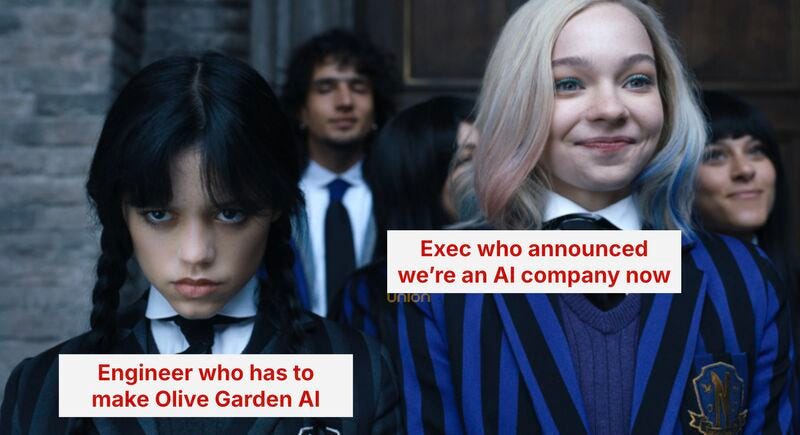
Companies are under the microscope for investors, shareholders, and boards and they need to share the fruits of their exploration. 2026 will end the grace period. AI builders will be on the hook to show, like any other operational input to their business, that the AI systems they’ve built are materially impacting the bottom line.
This should also boost demand forAI development infrastructure platforms that deliver observability, auditability, and governance capabilities.
2. Companies FINALLY learn how to productionize AI reliably
The inability for teams to bridge the chasm between experiment and production (i.e., pilot purgatory) has been the subject of half the AI headlines in 2025.
“80% of AI pilots never make it to production.”
“67% of AI engineers cry themselves to sleep weekly.”
Ok, I made that one up.
In 2026, thanks mostly to the popularization of AI Development Infrastructure (Part 1 anyone?), companies will solve the experiment-to-production problem. With a single platform to unify data, models, and compute across training and serving, companies are injecting the reliability and operational simplicity AI needs to succeed in production.
By the way, this also means AI initiatives can get more complex and agentic - because teams can handle them way more reliably.
3. Tech leaders who can’t deliver production AI get the boot
It’s harsh, but it’s happening. For about two years, boards have let CTOs, VPs of Eng., even CEOs tinker with AI without much oversight or clear expectations. In 2026, tech leaders are going to feel the heat to prove that they’re capable of adapting in the age of agentic AI. If they can’t, then like Marie Antoinette, their headcount will be reduced.

There’s plenty of history to learn from. We saw this years ago with CMOs during the advent of digital marketing. Some perfectly capable CMOs of the previous era found themselves unable to handle the seismic shift in how their job was done. And then those CMOs were shown the door. This is that moment for CTOs.
AI is forcing companies to evolve their tech stack, and CTOs who are still trying to bolt AI onto outdated infrastructure are going to be outpaced by those who evolve their infrastructure. If a CTO cannot prove that they can modernize their stack to be AI-native and productionize AI systems reliably, boards will find someone who can.
The flip side is that leaders who bridge the experiment-to-production gap will rise quickly. Showing competency in managing an AI-native stack is a quick ticket to leadership.
4. AI flop companies get squeezed out while investors move upstream
The era of “we wrapped an LLM with a UI and raised a seed round” is dead. Let’s be honest, it’s been dying a slow death all of 2025. UI and prompt engineering are not moats that companies can raise money on anymore.
So what kinds of AI companies will earn the attention of investors in 2026?
It’s the salmon era! We’re going upstream.
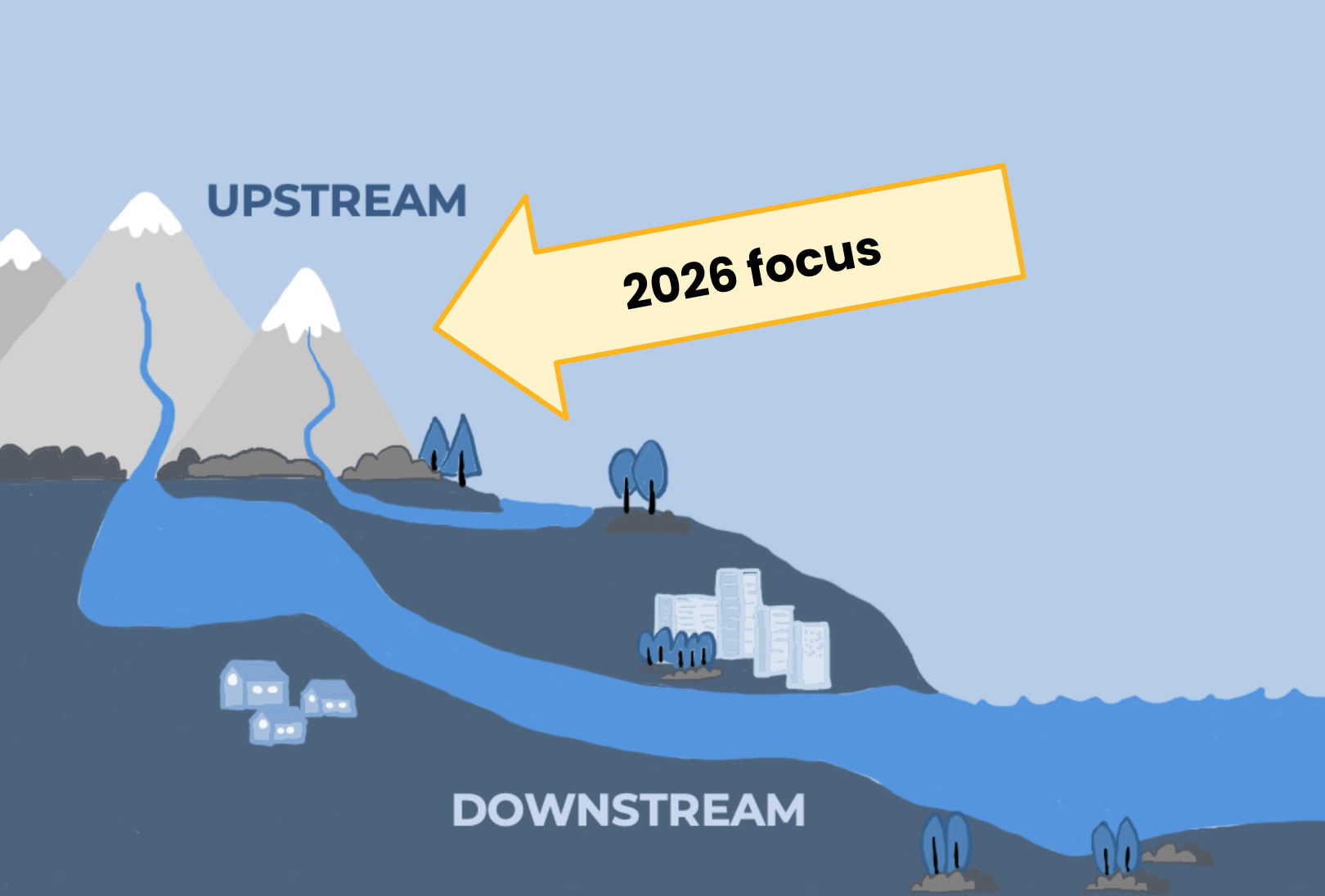
In 2026, we’ll see investors continue to inject money upstream in the AI market, into differentiated data and software infrastructure.
The companies tackling these hard, unsexy problems are the ones making AI succeed at scale. And as AI systems get more complex and demanding (think armies of agents), more and more customers will come seeking high-quality, AI-native infrastructure tools to help them scale and maintain system reliability.
5. Companies stop chasing every AI idea and start fixing operational chaos
* Infomercial voice * Has this ever happened to you? Your org demoes too many tools, adopts a bunch with a vague expectation that they’ll boost productivity, spins up pilots of internal AI initiatives, and the needle doesn’t move.
Along with ROI and CTO scrutiny, in 2026 organizations are going to focus on adultifying AI operations. That means reining in the AI spending spree and trying to simplify operational complexity. After a few years of awkward growth spurts and questionable experiments (it's not a phase, mom!) AI is starting to grow up.
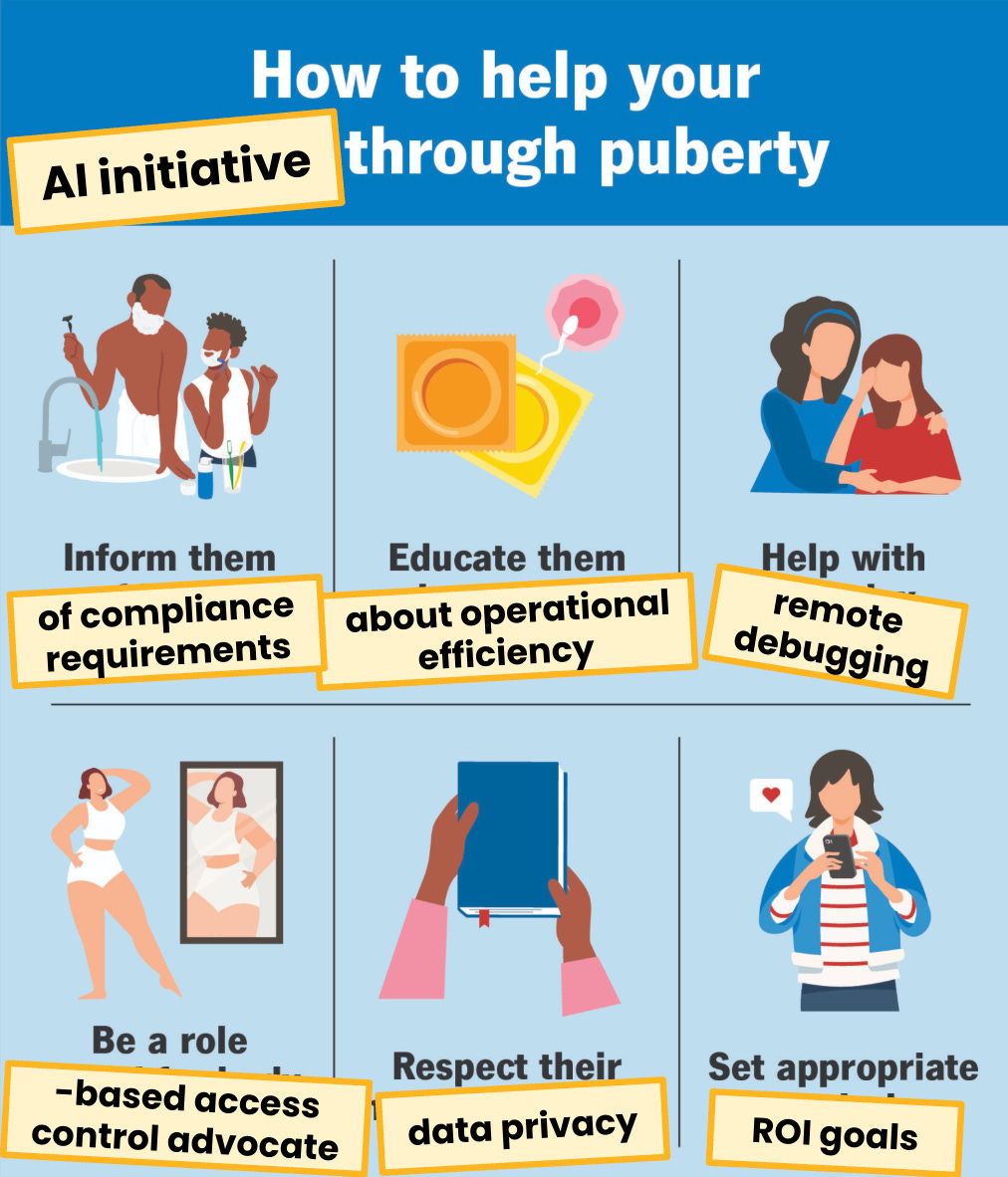
This means adopting AI development infrastructure, but it also means scrutinizing the way internal teams are integrating AI tools. Meta announced it would grade employees’ AI skills in an effort to improve operational efficiency. Duolingo told employees that AI will be a part of performance reviews and hiring.
From tech stacks to processes, 2026 will see a contraction in exploration and a laser focus on efficiency.
2026: Hype dies, accountability flies
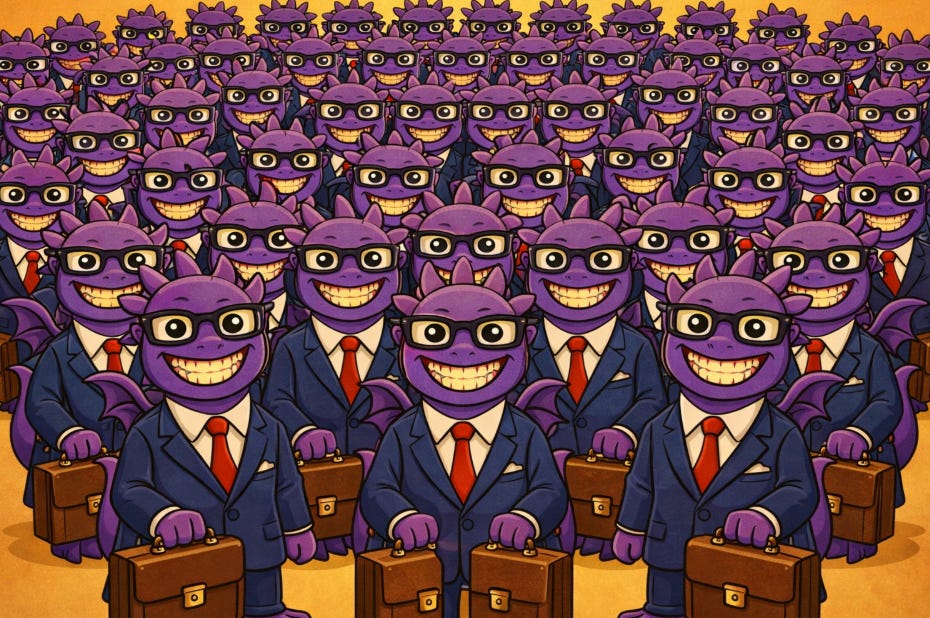
Aren’t you glad I didn’t say “bubble”? This year is going to elevate AI winners from all the flops and slop out there. The industry is still adolescent (see the puberty graphic above again, I worked hard on it), but everyone needs to grow up sometime. As leaders get serious about measuring AI initiatives’ impact on real business outcomes, companies who can mature their operations will win. Good luck!